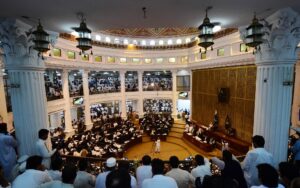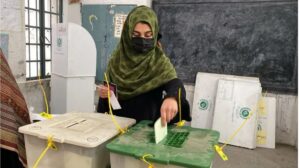


The landscape of political communication in Pakistan serves as a vital bridge between political actors and the masses. These communication tools are not merely channels but are carefully curated stepping stones designed to ensure that political messages are received, understood, and followed by public action.
This process operates in a constant cycle, refined continuously to meet the specific requirements of the era. Because the process is so heavily dependent on media coverage, the media has transitioned from a simple messenger into a powerful political actor in its own right, influencing policies and defining the boundaries of public discourse.
The Influence of Mainstream Media and Talk Show Culture
Media narratives currently dominate the Pakistani sphere, particularly through prime-time news and talk shows that target urban and suburban audiences. These programs serve as the primary platforms for discussing political issues, yet they often prioritize a mix of analysis and sensationalism over systematic debate. Governance and politics are frequently inserted into a saturated arena of competing storylines and exaggerated confrontations.
By focusing on sensational sound-bites and selective quotes, these shows set the national agenda while simultaneously decreasing the space for the detailed, analytical discussions essential for promoting political literacy and genuine accountability.
The Transformation of the Digital Sphere and Youth Engagement
In addition to traditional mediums, the political agenda is rapidly shifting toward the digital sphere to capture the attention of Pakistan’s youth. Social media has opened unique pathways for increased democratic participation, allowing political leaders to interact directly with the public without the influence of traditional editorial gatekeepers or regulation.
While this fosters a sense of independence and encourages citizen journalism, it also creates a landscape where misinformation and fake news travel with unprecedented speed. This digital shift has introduced a new era of communication defined by speed rather than depth.
Digital Populism and the Trivialization of Democracy
The rise of digital populism in Pakistan is marked by the use of memes, short-form content, and highly emotional messaging. Although these tools may appear harmless, they often translate into engagement with trendy content rather than engagement with actual policy. This trend trivializes the gravity of democracy and fosters a deeply polarized society built on half-truths.
When the focus shifts from factual accuracy to viral potential, the resulting environment becomes a breeding ground for populist messaging that ignores the complexities of governance.
The Responsibility of Active Democratic Participation
The trivialization of politics is a serious concern that Pakistan must manage with urgency. There is a collective responsibility for the public to break free from the cycle of rebranded narratives and futile communication modes.
As active participants in the democratic exercise, citizens must recognize that mindlessly engaging with content that ignores their best interests leads to a culture where serious issues are sidelined. The growing divide in Pakistan can only be addressed if both the public and those in power begin to treat political communication with integrity and mindfulness.