
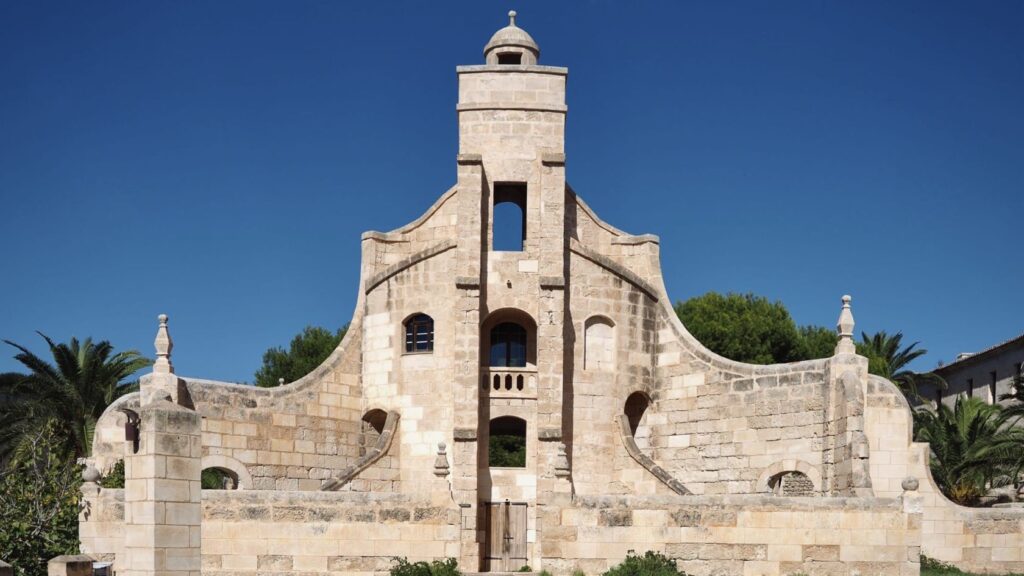
Did you know? an 18th-century quarantine station becomes an intense Art Residency in Menorca, an 18th-century quarantine station on a small island has been transformed into an art residency where phones are completely banned.
Dubbed ‘purgatory for artists‘, Quarantine offers an intensive programme devoted to finding freedom through constraint.
Also Read: In the Valleys Of Chitral, Where The Kalash Greet The Summer Sun
The residency takes its name from its location: an 18th-century lazaretto off the coast of Menorca, Spain. Built between 1793 and 1807, the fortress in the port of Mahón once held travellers for weeks until they recovered from illness. The quarantine station closed about a century later, but its Gothic architecture and old cemeteries remain.
Today, the island serves as a tourist destination, an event venue, and the home of this unusual residency.
Carles Gomila created Quarantine in 2017. The Art Residency in Menorca evolved through several experimental versions before taking its current form in 2023, in partnership with Joan Taltavull, Itziar Lecea, and Darren Green.
Each spring and autumn, around sixty participants travel to the island for a week-long, highly structured programme. Organizers keep the details secret and ban cell phones, allowing residents to disconnect completely. This detachment encourages intense focus and shared vulnerability. Residents know that what happens on the island stays there. They even have the option to burn their work at the end of the week.
Also Read: Chilam Joshi Festival: A Vibrant Celebration of Kalash Culture
The residency does not aim for relaxation; it pushes artists toward transformation. Gomila insists Quarantine works as a training programme, not a retreat, designed to challenge artists beyond their usual limits.
Residents move between art labs and sessions with high-profile mentors such as Yuko Shimizu and Martin Wittfooth. They attend varied evening events, and the art labs change pace with each edition to create surprise and risk. Gomila ensures that fewer than half the activities repeat, keeping the experience fresh and impactful.
Unlike traditional art schools, Quarantine does not focus on technique or theory. It centers on mindset, combining art, education, psychology, and strategy. The programme helps participants confront fears, unlearn limiting habits, and rediscover their creative drive.
Although visual art remains the main focus, Quarantine attracts participants from diverse fields. Law professionals, psychiatrists, chefs, dog trainers, designers, and art directors work side by side, exchanging ideas and exploring new ways to create.