
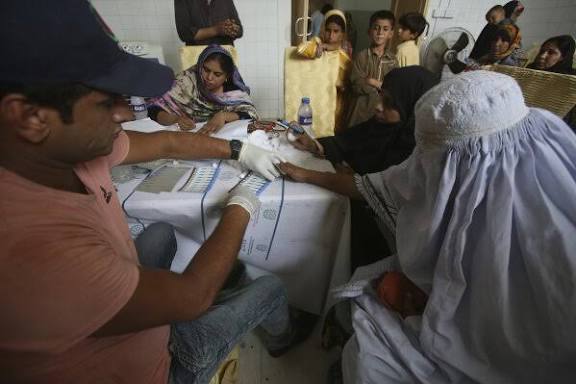
On a cold morning in Peshawar, Khalida Gul arrives at Hayatabad Medical Complex after travelling for three hours from her remote village. She hides her test reports close to her chest. She fears social judgment more than the virus that entered her body through an untested blood transfusion five years ago.
She began treatment immediately. Her husband and second child remain HIV-negative. Her father, retired government employee Muhammad Maskeen, says the family panicked until the HIV program staff guided them. He says the real struggle now is managing the financial load and coping with people’s attitudes.
Rising HIV Case
Data from the Khyber Pakhtunkhwa HIV, Hepatitis and Thalassemia Control Program shows a growing number of people seeking testing and treatment. Officials say the rise reflects awareness, not an explosion of infections.
Table: hiv situation in Khyber Pakhtunkhwa (as of 25 November)
| Indicator | Number |
|---|---|
| New cases in 2024 | 1,276 |
| Total registered patients | 9,749 |
| Registered women | 2,454 |
| Estimated actual patients | 29,702 (may rise to 40,000 next year) |
Program head Dr. Tariq Hayat says 70% of registered patients are men who returned from Gulf countries after testing positive during visa renewal. He says many do not inform their wives, which exposes women to infection and delays diagnosis.
Women face the harshest social consequences
Paloosha Khan*, who has lived with HIV for three decades, guides women across KP. She says women experience discrimination that has nothing to do with medicine.
Women tell her they are kept away from utensils, restricted to cleaning work, stopped from holding their own children, and denied clinic visits. She says awareness sessions improve family behaviour, but many women continue to suffer silently.
table: confirmed modes of hiv transmission in kp
| Mode of Transmission | Cases |
|---|---|
| Unsafe sexual practices | 6,108 |
| Infected blood transfusion | 1,019 |
| Repeated drug-injection use | 1,088 |
| Reused medical injections | 180 |
| Contaminated surgical instruments | 48 |
| Mother-to-child transmission | 324 |
| Medical procedures (health workers) | 21 |
Cultural Barriers
Dr. Anum, coordinator at HIV centres in LRH and HMC, says men often collect medicines for their wives instead of bringing them for check-ups. She says this prevents proper viral-load monitoring and increases risks during pregnancy and childbirth.
Sajid Khan, deported from Dubai after testing positive, now runs a mobile-repair shop. He avoids discussing how he contracted HIV but says the program’s counselling helped him communicate with his family.
media headlines inflate fear, say officials
Monitoring officer Jalal Khan says sensational reporting fuels panic. He says the increase in registered cases means people are no longer hiding and are seeking help, which reduces deaths.
He warns that Global Fund support has already dropped by 30% and will end in 2030. The KP Health Department has submitted a PC-1 worth 2.6bn rupees (2.6bn rupees equals 9.3mn US dollars) that includes 400mn rupees (400mn rupees equals 1.4mn US dollars) for awareness campaigns.
Women continue to face blame
Sajida, another patient at HMC, tested positive after her husband’s medical screening for Saudi Arabia. Her children tested negative. Her relatives now avoid eating with her, and her in-laws do not allow her to hold the children.
Paloosha says many women receive medicines secretly in grocery bags and face abandonment when husbands take second wives. She says treatment enables women to live healthy lives, maintain safe marital relations and give birth to HIV-negative children.
HIV is a treatable medical condition
Medical specialist Dr. Raza Muhammad says HIV spreads through multiple routes, including unsterile medical tools, barber blades, unsafe sex and contaminated blood. He says anyone can get infected and the virus does not reflect personal character.
treatment works only when patients are not forced into hiding
Dr. Tariq Hayat says daily medication keeps the virus under control. He says fear causes more damage than HIV itself.
He urges people to register at any of the 13 centres across 35 districts and access free testing and medicines.
table: locations of hiv treatment centres in kp
| Districts Covered | Number of Centres |
|---|---|
| 35 districts across KP | 13 centres, including Bajaur, Kurram, North Waziristan |
For thousands of women in Khyber Pakhtunkhwa, survival requires more than medicine. It requires a society that listens, understands and stops blaming women for a disease they did not cause.
Names changed to protect identity.