
Khyber Pakhtunkhwa’s transgender community faces a relentless crisis. Over the last decade, 161 transgender persons have been murdered in the province, yet justice remains elusive, and state protections largely absent. Hate crimes, extortion, and targeted killings are not isolated incidents; they are recurring patterns embedded in society.
Farman, known as Titli, was beaten and killed beside Gulbahar police station on June 1, 2025. Her killer remains free. In Abbottabad, Zaibi was shot while performing at a wedding, a place that often serves as a primary source of income for transgender people. From 2015 to 2025, such incidents have repeatedly highlighted the state’s failure to safeguard this vulnerable community.
Also Read: Transgender community in KP faces rising violence, HIV stigma
Life Under Constant Threat
Violence extends beyond murder. Alina, an Afghan transgender woman, shared the trauma of being abducted and forcibly recorded. Years later, these videos resurfaced online. “Seeing my video circulated on WhatsApp forced me to switch off my phone for weeks,” she recalls.
Rejection often begins at home. Transgender individuals are ostracized by their families the moment they reveal their identity. Emotional abuse, forced isolation, and domestic violence follow, leaving many to fend for themselves. Society, reinforced by rigid cultural norms, punishes gender diversity rather than embracing it, pushing the community to the margins.
The consequences are severe. Mental health crises, suicide attempts, and despair are widespread. Baby, a transgender woman in Swabi, recently died by suicide. Her friend said, “Every day is a struggle for survival. We live in constant fear.”
Policy and protection measures remain inadequate. Muhammad Rizwan, provincial coordinator at the National Commission for Human Rights, highlighted that while the KP government drafted the Khyber Pakhtunkhwa Transgender and Intersex Persons (Welfare, Empowerment and Protection of Rights) Act, 2022, it remains stalled due to observations from the Council of Islamic Ideology. The Transgender Persons (Protection of Rights) Act, 2018 also exists but is poorly enforced.
Also Read: Spread of HIV/Aids And The Stigma Around It
Resilience Amid Oppression
Qamar Naseem from Blue Veins, a human rights organization, emphasized that recurring murders reveal systemic gaps. She called for police sensitization, gender-sensitive SOPs, and better coordination with community representatives to ensure timely protection.
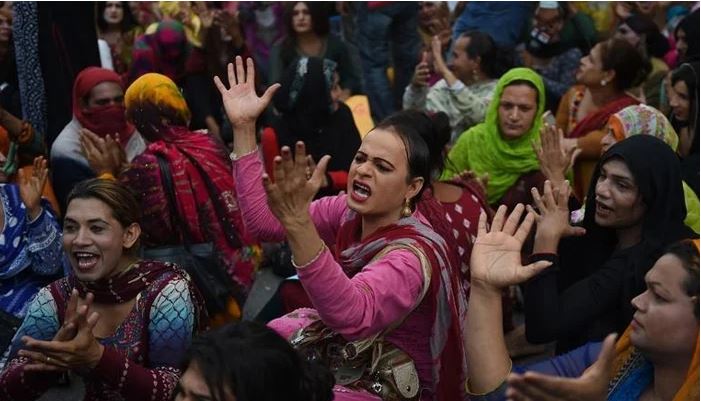
Yet, amid this oppression, the community continues to resist. Mahi Gul, a transgender rights activist, said, “Our existence is resistance. Our struggle is for dignity, safety, and equal rights.” Legal efforts are ongoing. A writ petition challenges the recent crackdown in Swabi and attempts to forcibly expel transgender persons from their districts. The court has affirmed that residing in any district with a valid national identity card is a constitutional right.
Transgender persons in Khyber Pakhtunkhwa continue to live under the shadow of violence and neglect. Their stories, like Titli’s and Baby’s, reveal not only personal tragedies but systemic failures — and a call to society and the state to finally recognize their rights, dignity, and humanity.