
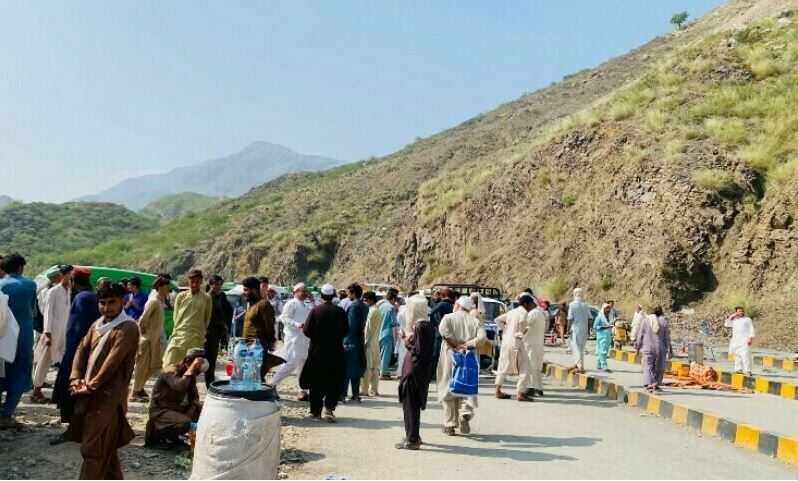
There is no trace of blood anywhere, no evidence to follow. The greatest reason behind the ambiguity surrounding the Tirah incident is the absence of confirmed information from independent sources about what occurred.
This remote region remains inaccessible to journalists, either by deliberate denial or because they cannot afford to reach it. Whatever the reason, the result is clear: the lack of reliable information and responsible reporting has created space for uncertainty.
When no independent confirmation exists, ambiguity grows naturally. Yet the way the Tirah incident turned into propaganda, exaggerated accusations, and political exploitation has made the tragedy even more mysterious. This concealment blocks the truth to the extent that no one can estimate, much less confirm, what actually happened.
This is not the first incident of its kind. Many similar events in the past challenged both the government and the media. The case once again shows the need to grant journalists access so they can separate claims from propaganda.
If Pakistan wants to prevent similar misunderstandings, it must confirm every incident through independent sources so the real facts emerge. Until then, falsehood and baseless accusations will dominate. Human nature tilts quickly toward such narratives, and doubts mix with facts, contaminating them. Even when truth appears, suspicion clouds it and erodes its clarity.
The hatred and misunderstanding that spread from distortion serve the hidden goals of those who exploit events. Their purpose becomes more destructive than terrorism, because propaganda poisons the national atmosphere. Only truth, honesty, and reliable confirmation can counter this. Unfortunately, Pakistan lacks all three, which is why even official government statements fail to gain trust.
How the Tirah incident unfolded is one question. But even without those details, the first casualty of propaganda was the provincial government. Without providing clear information or taking a transparent stance, the government announced financial aid for victims. The Chief Minister’s silence on claims deepened suspicions. Where ethnic, linguistic, and political rivalries mix, every chance to exploit public emotions turns into a weapon. Silence from authorities fuels this fire.
The lack of responsible representation, clear investigations, and accountability ensures repetition of such crises. In Pakistan, hearsay often outweighs evidence. Authorities choose convenience and compromise over truth and transparency. In such a setting, propaganda and mistrust thrive.
We do not speculate about the exact reality of the Tirah incident. What matters more is the urgent need for a clear stance so ambiguity dissolves and truth emerges.
Sadly, Pakistan has witnessed such confusion before. Past incidents created the same cycle, only to vanish in silence. The same may happen again, where blood spilled in Tirah disappears into the soil instead of becoming part of accountability.
Instead of reducing the incident to protests and slogans, the priority must be to uncover the truth. Only then can the country prevent propaganda from prevailing. In such moments, mere lamentation of the night’s darkness is never enough.